
This post is sponsored by HCA HealthOne and written by their patient, Becca Miller.
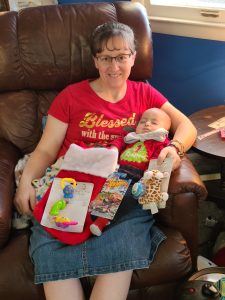 I thought I knew what “high-risk pregnancy” meant. Until I didn’t. If you had told me that I would leave Guernsey, Wyo., and travel 200 miles to Denver to deliver my baby, I would not have believed you.
I knew that I was a high-risk pregnancy due to my previous C-section and later, a vaginal birth after cesarean. But then, I found out at my 20-week ultrasound my placenta wasn’t in an ideal position. At first, I was told it was simply placenta previa, which means the placenta is completely or partially covering the opening of the uterus. This comes with a new set of challenges, including the chance of hemorrhaging, which could cause me to deliver at 36 weeks at HCA HealthONE Presbyterian St. Luke’s — a part of HCA HealthONE. Plus, I would have a C-section no matter what.
There was a slight chance my placenta would move but apparently it wanted none of that. When I went in for an MRI, the team found that not only did I have placenta previa but placenta accreta as well. Placenta accreta is a rare condition when the placenta attaches too deeply into the uterine wall. It happens because of scar tissue left over from uterine surgery. My doctor thinks it could have resulted from my previous C-section. These diagnoses can be life-threatening to both me and my baby.
I had a great checkup but that night, I started hemorrhaging and I passed a blood clot. I was worried and my care team decided I should come to the hospital in the morning for some testing. When I arrived, I was having mild contractions. The doctors were having a tough time stopping them with medication. I thought this would be a quick day with, at most, a checkup and observation and then life would be back to normal. But after several hours of monitoring me and the baby, my doctor recommended that I stay in the hospital. Not long after that, it became clear my baby and I needed to move to a different hospital. One better suited for treating my potential complications.
This was news I was not expecting. I thought it was crazy. It was only April 16, and my due date wasn’t until end of June. That meant 2.5 months of being away from my responsibilities. But of course, I wanted to do everything to keep my baby safe. So off I went to Denver with only my purse and the clothes I was wearing.
I took a helicopter ride from Wyoming to HCA HealthONE Presbyterian St. Luke’s, where they specialize in caring for patients with placenta accreta.
At 29 1/2 weeks, I settled into the hospital’s antepartum unit. I needed to extend my pregnancy as long as possible. My nurses became a part of my family and sewing projects became my favorite distraction. My husband brought my sewing machine to the hospital, and I even played long-distance coordinator for the family hundreds of miles from home. I couldn’t have been in a better place when my son, Timothy, was born at 33 weeks.
Timothy was delivered via C-section after the team discovered I was starting to dilate, which would mean hemorrhaging for sure if I didn’t deliver within a few hours. We also knew there was a chance I would need a hysterectomy if the placenta wouldn’t release from the uterus wall. The doctors did an awesome job trying to save my uterus, but after I lost 2 quarts of blood, we decided the best-case scenario was a hysterectomy.
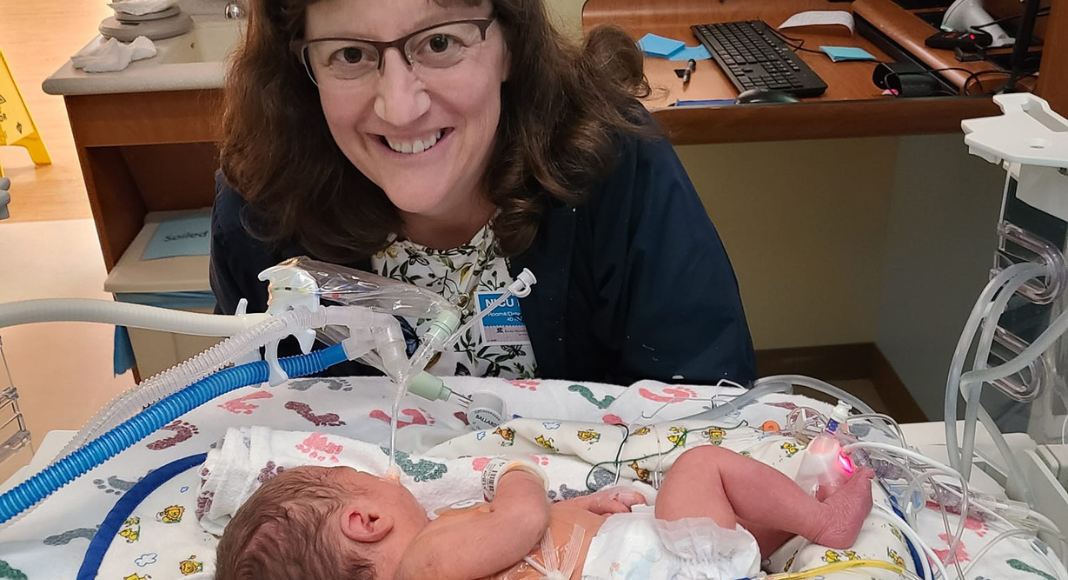
While I was healing, our baby was admitted to the neonatal intensive care unit (NICU) at HCA HealthONE Rocky Mountain Children’s, which is the pediatric hospital on the HCA HealthONE Presbyterian St. Luke’s campus.
Timothy was tiny but mighty. His birth weight was 3 pounds, 11 ounces, and he was in the NICU for 37 days. I was relieved he was being taken care of by the great nurses and doctors at the hospital. We both had the best care. This wasn’t the birth plan we had in our minds. Complications at this level were something I didn’t even know was possible.
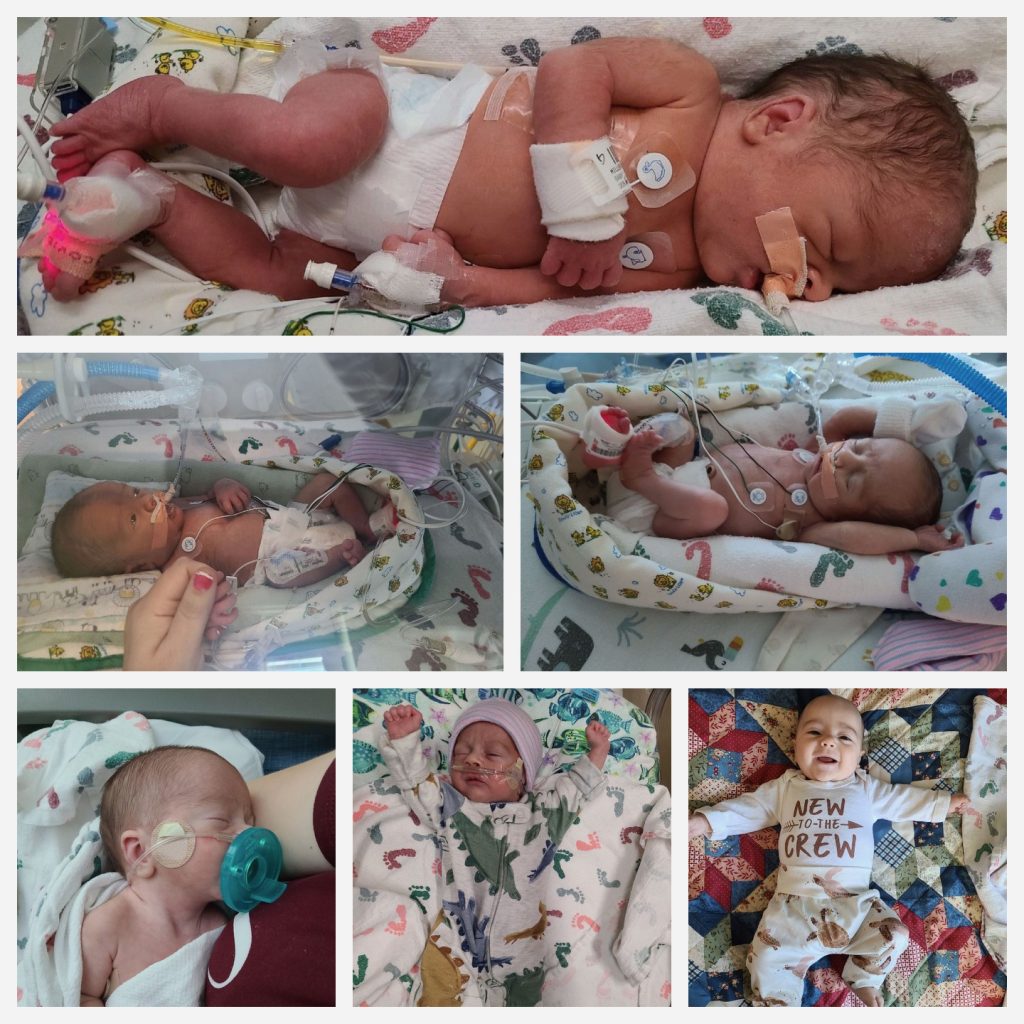
We left Wyoming on April 16 and arrived home June 14. The experience was one that I didn’t expect or choose — it was two months of something I thought would be impossible. And I would do it all over again.
High-risk pregnancy care in Denver
HCA HealthONE offers experienced and compassionate high-risk pregnancy care. Our maternal-fetal health specialists will collaborate with your OB/GYN to provide coordinated care from preconception to labor and delivery. The high-risk pregnancy care we offer includes:
- Maternal-Fetal Medicine doctors to manage high-risk pregnancy conditions
- Prenatal genetic counseling
- High-risk pregnancy navigators to offer coordinated care
- Antepartum unit for moms to be who need to be hospitalized
- NICU care for extra support after birth